There is something quietly radical about choosing a handmade object in a world built on mass production. It is not nostalgia, exactly, though memory plays its part. It is closer to recognition — a sense that the thing in your hands was made by someone who cared about the making.
Walk through any market where potters, weavers, or woodworkers display their goods and you will notice it immediately: no two pieces are identical. A slight variation in glaze, an asymmetry in the handle, a grain pattern that could never be replicated. These are not flaws. They are signatures of process, evidence that a human being stood at the centre of creation.
The Economics of Imperfection
Mass production thrives on consistency. A factory can produce ten thousand identical mugs in a single day, each one dimensionally perfect, each one indistinguishable from the next. The economics are undeniable — unit costs drop, availability rises, and consumers benefit from affordable goods that perform exactly as expected.
Yet something is lost in that equation. When every object is identical, none of them carry meaning beyond their function. A mug becomes merely a vessel. A chair becomes merely a surface. The object recedes into the background of daily life, noticed only when it breaks.
Handmade objects resist this disappearance. They demand attention — not loudly, but persistently. The weight of a hand-thrown bowl feels different from its factory counterpart. The texture of hand-stitched leather tells a story that machine-cut material cannot.
Why We Pay More
The premium attached to handmade goods is not simply a matter of scarcity, though limited production certainly plays a role. It reflects a deeper transaction: we are paying for time, skill, and intention. We are acknowledging that the maker's hours have value beyond what a machine could accomplish in seconds.
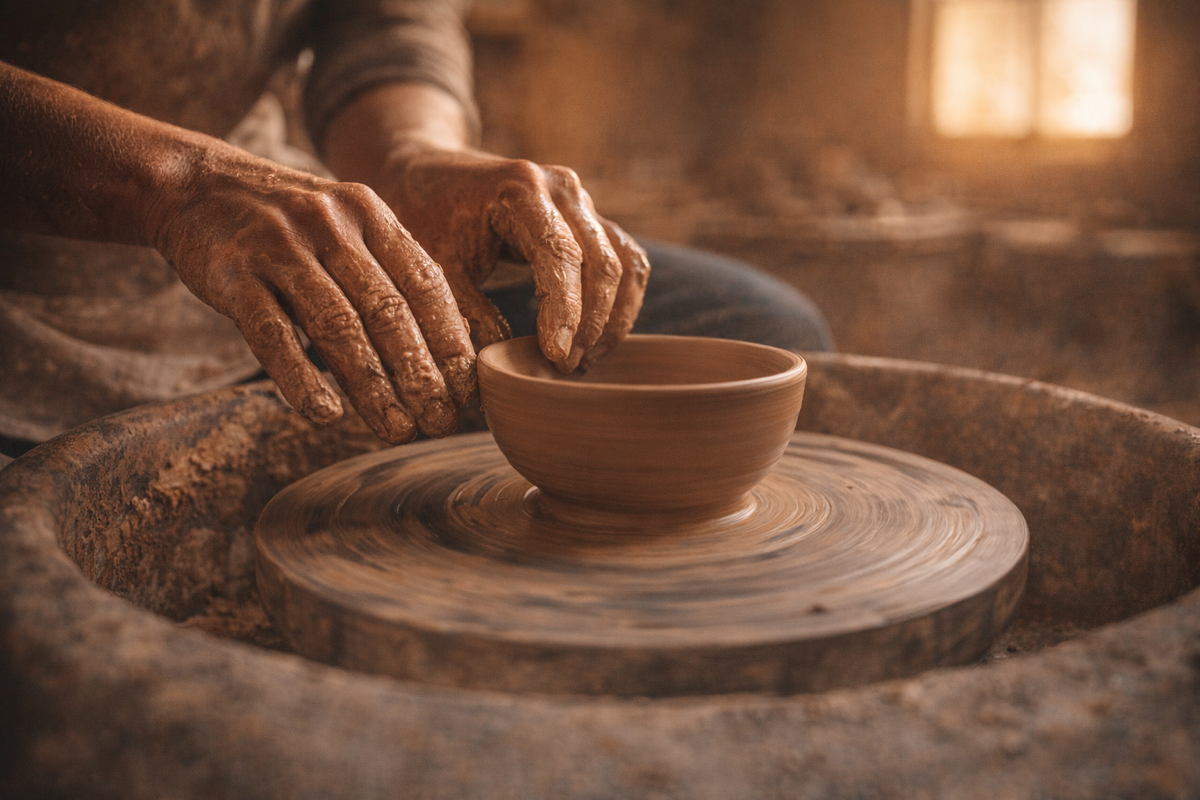
This is particularly visible in ceramics, where the difference between studio pottery and industrial production is immediately apparent. A handmade piece carries the memory of the wheel — the centrifugal pull, the pressure of thumbs shaping clay, the decisions made in real time about form and proportion.
Craft as Resistance
In an age of algorithmic optimisation and automated production, choosing handmade is a quiet form of resistance. It says that efficiency is not the only value worth pursuing. That beauty can emerge from slowness. That imperfection is not a failure of quality control but an expression of humanity.
This does not mean rejecting modern manufacturing entirely. The world needs both — the accessibility of mass production and the meaning-making of craft. But it does suggest that we have lost something in our rush toward optimisation, and that reclaiming it requires intention.
The Maker's Perspective
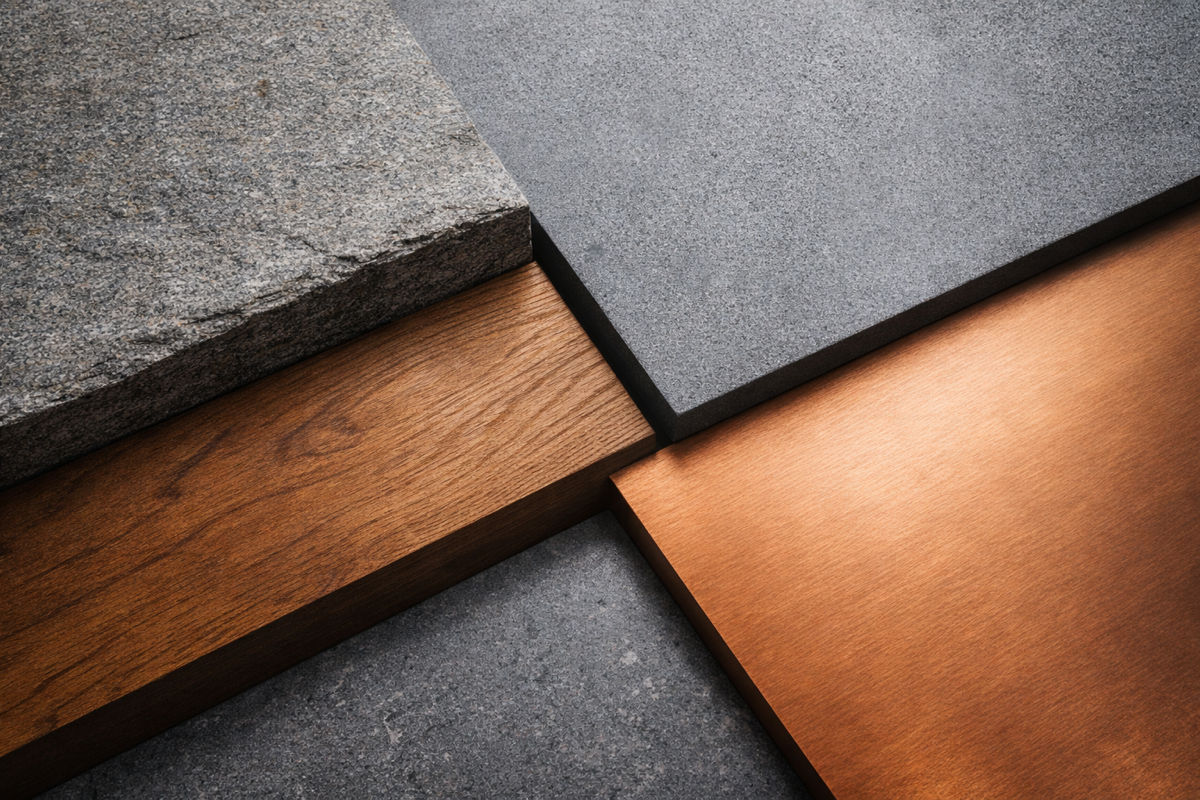
For the artisans themselves, the appeal is different but equally compelling. There is a satisfaction in seeing raw material transformed through skill and patience. Wood becomes furniture. Clay becomes vessels. Fibre becomes cloth. Each transformation carries the maker's decisions — hundreds of small choices that accumulate into something whole.
This is work that resists automation not because machines cannot do it, but because the doing is the point. The process is inseparable from the product. Remove the human hand and you remove the very quality that makes the object meaningful.
Perhaps that is the ultimate appeal of handmade in a mass-produced world: it reminds us that making things is a fundamentally human act, and that the objects we surround ourselves with can carry more than function. They can carry presence.