Walk into any room and before you register furniture, layout, or colour, you register material. The cool of polished concrete beneath your feet. The warmth of timber panelling absorbing sound. The weight of stone walls holding centuries of temperature memory. Materials do not merely construct a space — they define its character entirely.
This is something architects understand intuitively but rarely articulate in simple terms: the choice of material is the most consequential decision in any design process. It determines not just how a building looks, but how it feels, sounds, ages, and relates to its environment.
Stone: The Language of Permanence
Stone speaks of duration. A limestone wall carries geological time in its surface — millions of years compressed into something you can touch. This is why stone remains the material of choice for buildings that aspire to outlast their makers: cathedrals, monuments, institutions. But stone also creates intimacy. A stone cottage in the Yorkshire Dales feels sheltering precisely because its thick walls separate interior from exterior so completely.
The character of stone varies enormously with type and treatment. Rough-hewn granite creates rusticity. Polished marble suggests luxury. Sandstone weathers into organic forms that blur the boundary between building and landscape. Each choice carries associations that accumulate over centuries of cultural use.
Timber: Warmth Made Visible
Wood is perhaps the most psychologically comfortable building material. Studies consistently show that people rate timber interiors as warmer, more relaxing, and more welcoming than equivalent spaces in other materials. This is not merely associative — wood genuinely regulates humidity and temperature, creating measurably more comfortable indoor environments.
But timber's appeal goes beyond comfort. It connects interior spaces to the natural world in ways that synthetic materials cannot. Every timber surface carries the history of growth — annual rings recording seasons, grain patterns revealing the forces that shaped the tree. A wooden floor is not merely a surface but a biography.
Concrete: Honest Brutality
Concrete divides opinion more sharply than any other architectural material. Its critics see coldness, institutional severity, decay. Its advocates see honesty, sculptural possibility, democratic accessibility. Both are correct, depending on how the material is used.
At its best, concrete achieves a kind of meditative calm. The smooth walls of Tadao Ando's churches create spaces of absolute stillness. The board-marked surfaces of Brutalist housing carry the memory of their making — the grain of formwork timber preserved in permanent negative. Concrete refuses to pretend, and that refusal can be either liberating or oppressive depending on the skill of the designer.
Glass: Dissolving Boundaries
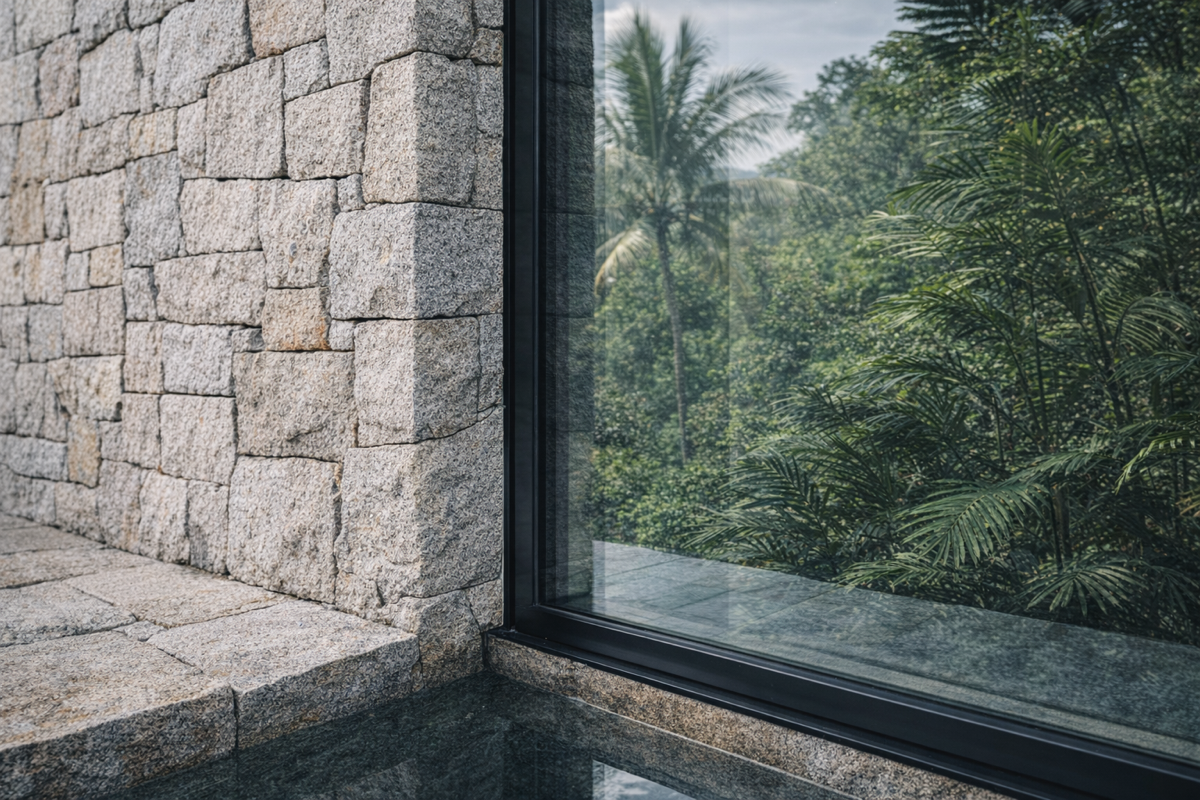
Glass transforms architecture's most fundamental act — the creation of enclosure — into something paradoxical. A glass wall is simultaneously barrier and opening, shelter and exposure. It allows interior spaces to participate in exterior landscapes while maintaining the thermal boundary that makes habitation possible.
The proliferation of glass in contemporary architecture reflects our changing relationship with the natural world. Where traditional buildings drew sharp lines between inside and outside, glass buildings negotiate a middle ground. They suggest that we need not choose between shelter and connection — that both are possible simultaneously.
The Conversation Between Materials
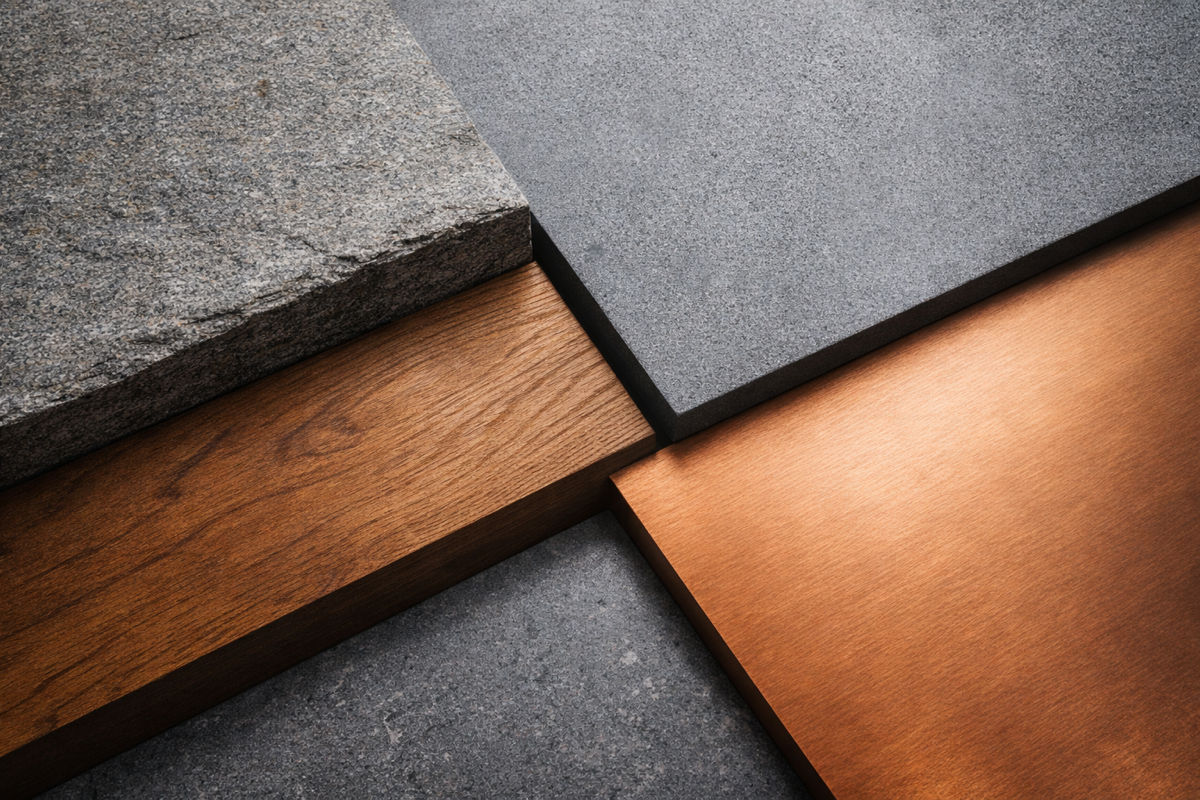
The most compelling spaces rarely rely on a single material. They create conversations — timber softening concrete, stone grounding glass, metal punctuating wood. These combinations generate complexity and richness that no individual material can achieve alone. The art of architecture lies partly in orchestrating these material dialogues, finding combinations that resonate rather than clash, that complement rather than compete.
Ultimately, materials are the vocabulary of spatial experience. Choose well, and a building speaks clearly about what it is and how it wishes to be inhabited. Choose poorly, and even the most elegant plan feels confused or dishonest. The material is the message.