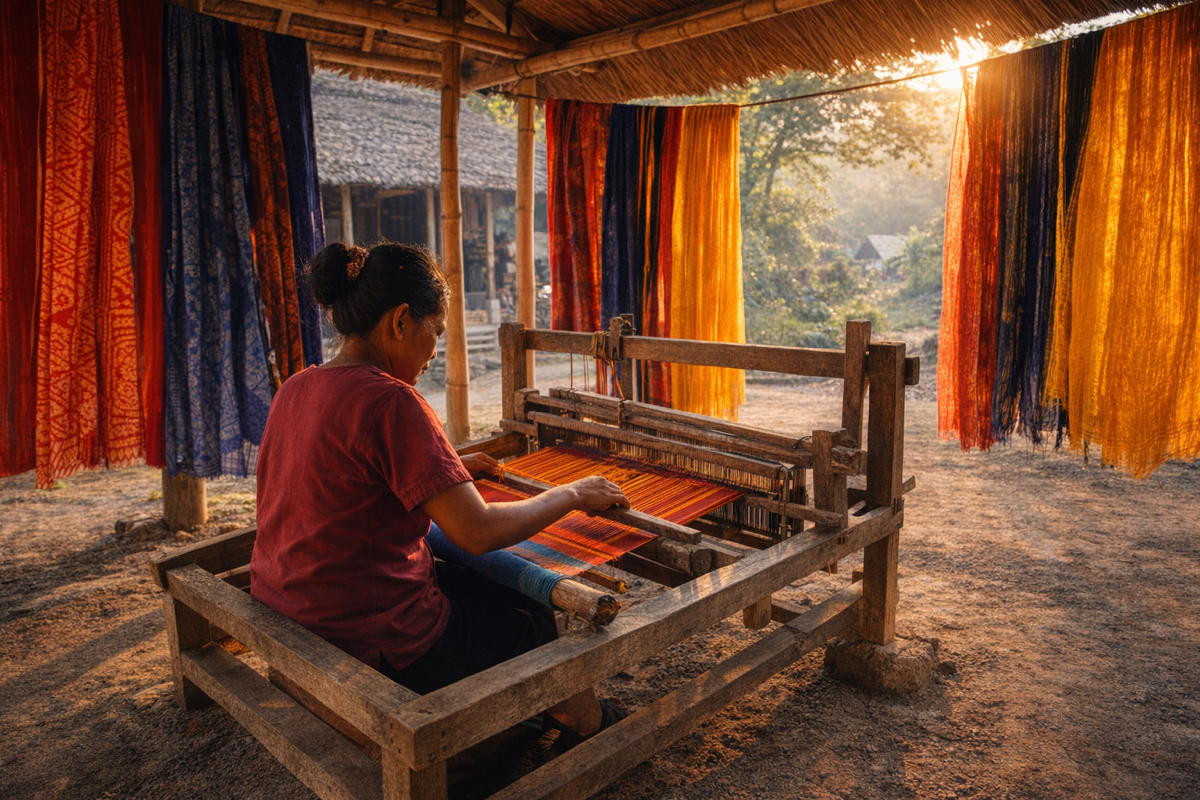
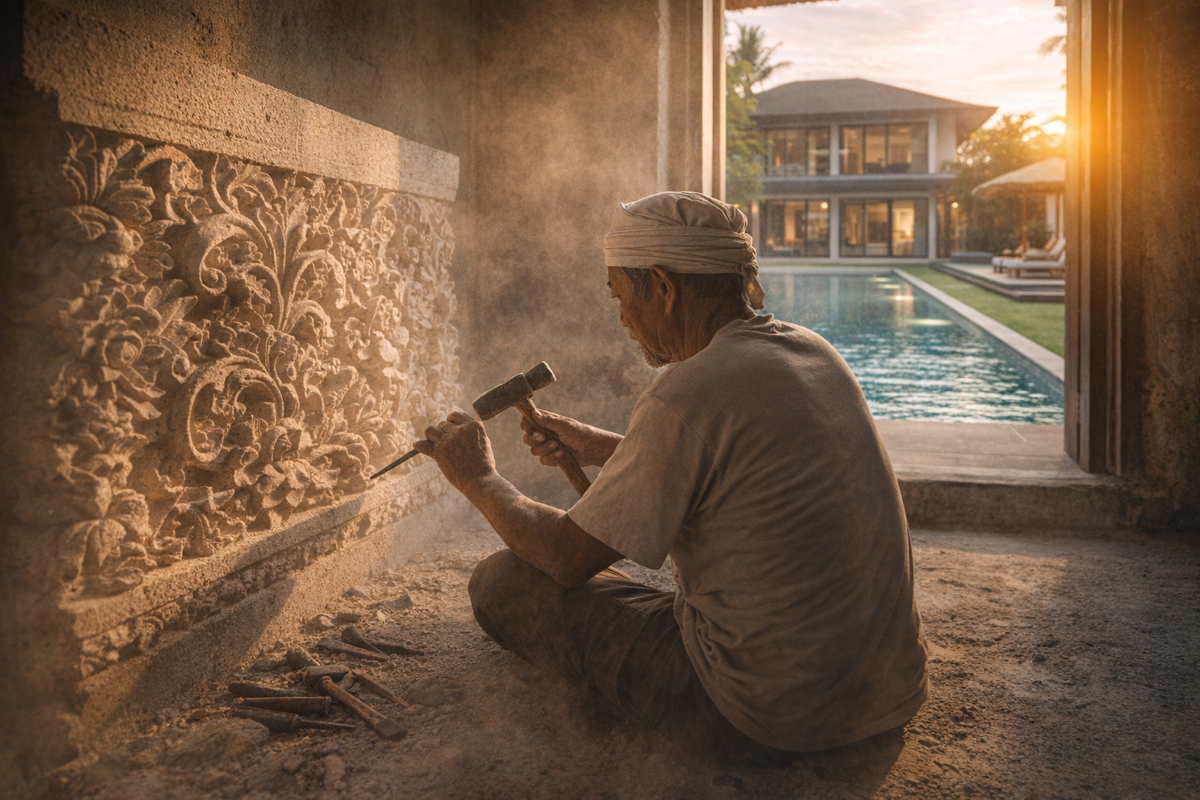
Bali has always been an island of makers. Long before tourism arrived, Balinese culture organised itself around craft — stone carving, woodwork, textile weaving, silver-smithing, and the daily creation of offerings that blend flowers, palm leaves, and rice into ephemeral sculpture. This heritage of making runs so deep that it shapes everything on the island, including how its finest hospitality spaces are conceived and built.
The best Balinese villas and resorts are not designed in isolation from their context. They emerge from it. Local stone walls, hand-carved wooden doors, terrazzo floors mixed with local river stones, and thatched alang-alang roofing create spaces that feel inevitable — as though they grew from the landscape rather than being imposed upon it.
The Villa as Craft Object
What distinguishes Bali's luxury hospitality market from comparable destinations is this integration of craft into the built environment. A villa in Seminyak or Ubud is not merely accommodation — it is a curated experience of material culture. Every surface tells a story of local skill and tradition.
Properties like Kinaree Estate Seminyak exemplify this approach, where traditional Balinese craftsmanship meets contemporary luxury in ways that honour both. The carved stone entry gates reference centuries of temple architecture. The timber pavilion structures echo the communal spaces of traditional Balinese compounds. Yet the amenities, spatial flow, and comfort levels are entirely modern.
Material Heritage
Bali's volcanic geology provides an extraordinary palette of building materials. Paras stone — a soft, pale volcanic tuff — has been carved into temple facades and domestic walls for centuries. Its workability allows the intricate relief carving that characterises Balinese architecture, while its porosity creates surfaces that age beautifully in the tropical climate, accumulating moss and patina that soften new construction into apparent antiquity.
Teak and coconut timber frame the structures, their density and natural oils providing resistance to the humidity and insects that would destroy lesser woods. Palm-leaf thatch creates roofing that breathes with the climate — insulating against heat while allowing air circulation that mechanical systems cannot replicate.
The Craft Economy
Luxury hospitality has become one of the primary economic engines sustaining Bali's craft traditions. A single villa project might employ dozens of local artisans — stone carvers, woodworkers, metalworkers, weavers, and landscape designers whose skills were passed down through family lineages. This creates a virtuous cycle: tourism generates demand for craft, which sustains the training of new artisans, which maintains the cultural knowledge that makes Bali distinctive.
This economic model differs fundamentally from resort development elsewhere in Southeast Asia, where international supply chains deliver standardised materials and finishes. In Bali, the supply chain is local by tradition and preference, creating properties with an authenticity that imported materials can never achieve.
Tropical Design Intelligence
Balinese architecture also embodies centuries of accumulated climate intelligence. The open-pavilion structure — walls that do not fully enclose, roofs that extend far beyond the building footprint, spaces that transition gradually between inside and outside — represents a sophisticated response to tropical conditions. Cross-ventilation, shade, and connection to garden spaces create comfort without the energy demands of sealed, air-conditioned boxes.
Modern luxury properties in Bali inherit this intelligence while adapting it to contemporary expectations. The result is a hospitality architecture unlike anything else in the world — one where craft tradition, climate response, and luxury converge into spaces that feel simultaneously ancient and current, local and universal.
For travellers seeking more than a beautiful room, Bali offers immersion in a living craft culture — one where every carved stone and woven textile connects the present to centuries of making.