
Globalisation promised efficiency. It delivered supply chains that span continents, products assembled from components manufactured in a dozen countries, and a consumer culture built on the assumption that distance is irrelevant. For decades, this model seemed unassailable. But cracks have appeared — in supply chain fragility, environmental cost, and the slow erosion of local economic resilience.
The economics of staying local present a different calculus. Not a rejection of global connection, but a recalibration of where value is created, captured, and retained. When money circulates within a community rather than flowing immediately outward to distant shareholders, the multiplier effect compounds. A pound spent at a local maker's studio generates more local economic activity than the same pound spent at a chain retailer.
The Multiplier Effect
Economic research consistently demonstrates that locally owned businesses recirculate a significantly higher proportion of their revenue within the local economy. The local baker buys flour from a regional mill, employs neighbourhood residents, and banks with a community institution. Each transaction generates further local transactions in a cascading chain of economic activity.
Compare this to the economics of chain retail, where revenue flows rapidly upward and outward — to distant headquarters, international supply chains, and shareholders who may never visit the community from which their returns derive. The same nominal transaction produces fundamentally different economic outcomes depending on where the business is rooted.
Property and Place
Nowhere is the tension between local and global more visible than in property markets. When the artisan tradition favour a particular region, prices rise in ways that can displace the very communities that made the area attractive. The artisan neighbourhood becomes unaffordable for artisans. The fishing village loses its fishermen to holiday-let conversions.
This is not an argument against investment, but for investment that respects the character and continuity of place. The most successful local economies find ways to attract capital while retaining community ownership and control — through cooperative models, community land trusts, and planning frameworks that prioritise long-term residents over short-term returns.
Craft Economies
Local craft economies offer a particularly compelling model. A ceramicist working from a village studio creates value that is inherently place-based. The work cannot be offshored or automated without destroying what makes it valuable. The maker's skill, the local materials, the studio's atmosphere — these are competitive advantages that no global competitor can replicate.
This place-based value creation sustains communities in ways that footloose industries cannot. When a factory relocates to cheaper labour markets, it leaves devastation behind. A craft economy, rooted in local skill and material, cannot relocate by definition. Its value is inseparable from its location.
The Cost of Convenience
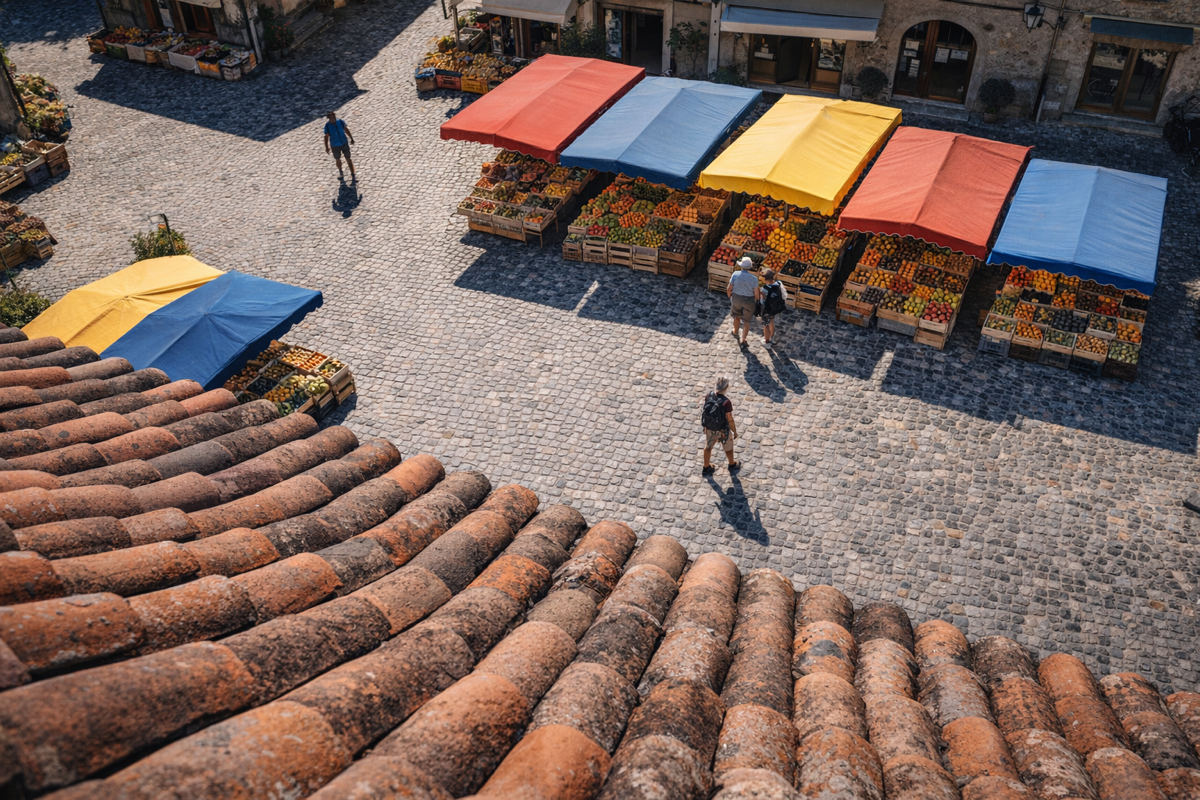
Choosing local often means choosing less convenience. The local shop keeps limited hours. The independent maker has a waiting list. The farmers' market operates only on Saturdays. Against the frictionless availability of global retail, these limitations can feel like obstacles rather than features.
But convenience has costs that rarely appear on the receipt. Environmental costs of long-distance shipping. Social costs of community economic decline. Cultural costs of homogenisation as every high street converges on the same chain offerings. When these hidden costs are accounted for, the economics of local begin to look not just competitive but superior.
Building Resilience
Perhaps the strongest argument for local economic investment is resilience. Communities with diverse, locally owned economies weather disruptions better than those dependent on single employers or distant supply chains. When global systems fail — as they periodically do — local networks provide the redundancy and adaptability that concentrated systems lack. The economics of staying local are, ultimately, the economics of survival.