In temperate climates, architecture is primarily a defence against cold. Walls are thick for insulation. Windows are small to reduce heat loss. The building envelope seals tightly against wind and rain. Tropical architecture operates from an entirely different premise: the enemy is not cold but heat, and the strategy is not sealing but opening.
This fundamental difference produces buildings that look and feel radically different from their temperate counterparts — and that offer lessons increasingly relevant as global temperatures rise and energy costs make mechanical cooling unsustainable for all but the wealthiest buildings.
The Open Pavilion
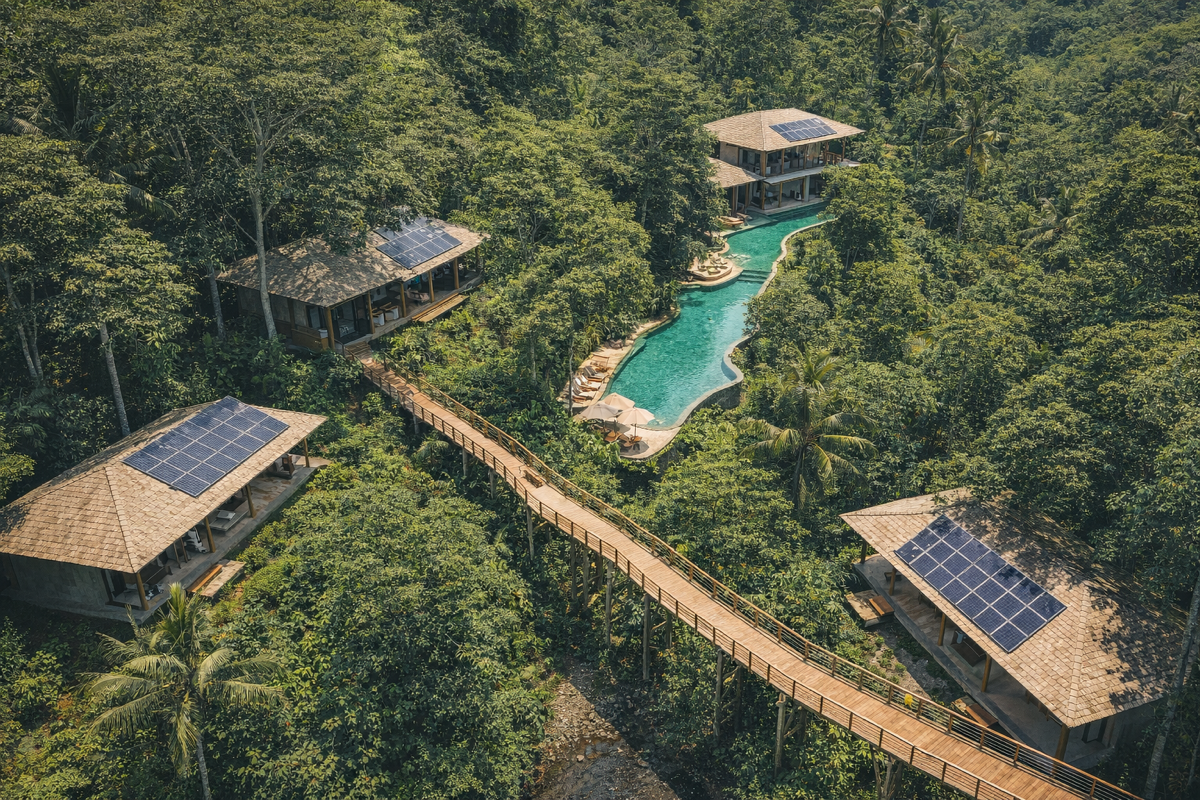
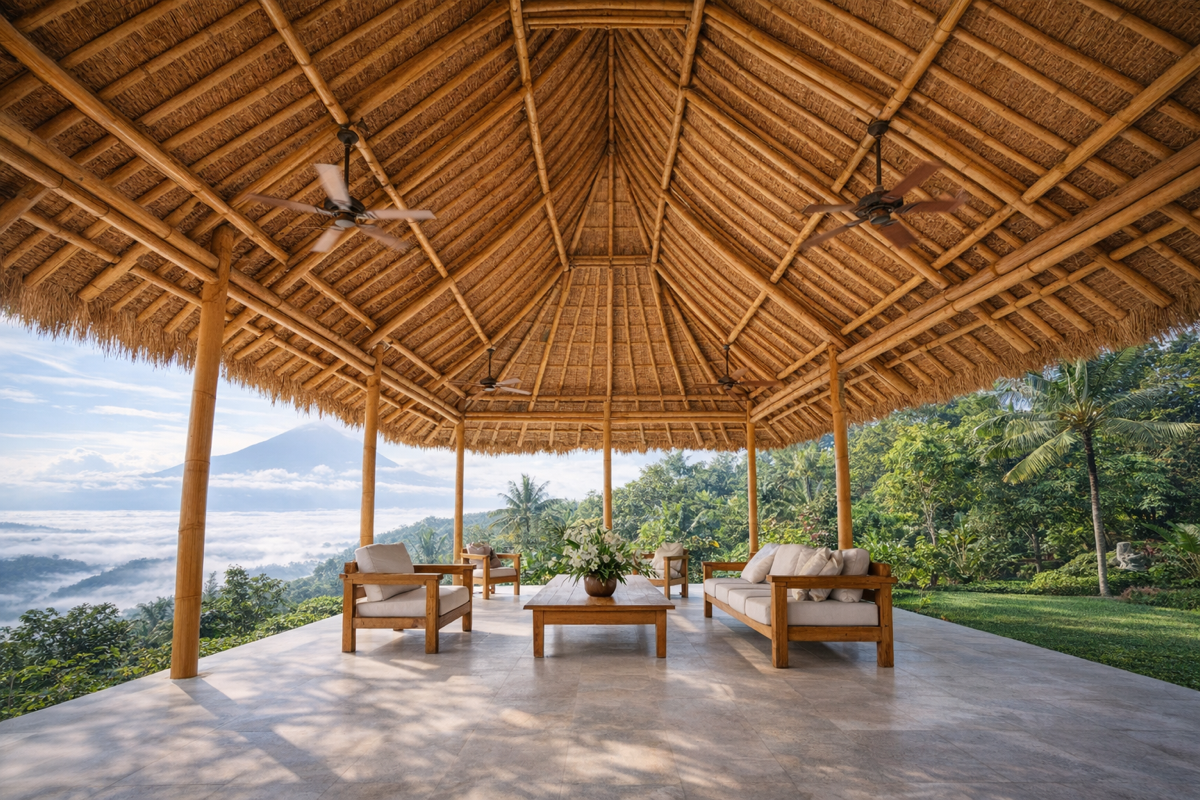
The defining gesture of tropical architecture is the pavilion — a roof supported by columns, with walls that are absent, minimal, or openable. This configuration prioritises air movement over enclosure, shade over insulation, connection over separation. The roof does the primary work: deflecting rain and blocking direct sun. Everything beneath it is negotiable.
Traditional Balinese, Thai, and Malay architecture all employ variants of this pavilion model, refined over centuries of empirical testing. The proportions — roof overhang relative to floor area, column spacing relative to prevailing wind direction, floor height relative to ground level — encode sophisticated climate knowledge in built form.
Ventilation as Design Driver
In tropical architecture, ventilation is not a mechanical system added after the building is designed. It is the design. Building orientation, opening placement, roof configuration, and spatial sequence are all determined primarily by their effect on air movement. A well-designed tropical building creates perceptible breezes through pressure differentials alone — no fans, no ducts, no energy consumption.
The stack effect — warm air rising and drawing cooler air in at lower levels — drives much of this passive ventilation. Double-height spaces, clerestory openings, and ventilated roof cavities exploit this principle to create constant air movement even in calm conditions. The result is comfort that mechanical systems achieve only through continuous energy expenditure.
Shade and Layering
Tropical architecture layers shade with the care that temperate architecture layers insulation. Deep eaves protect walls from both sun and rain. Louvred screens filter light while maintaining airflow. Vegetation — carefully positioned trees, climbing plants on pergolas, green walls — provides living shade that cools through evapotranspiration as well as simple sun-blocking.
This layering creates a gradient between full exterior exposure and protected interior — a series of transitional spaces that are neither fully inside nor fully outside. Verandas, covered terraces, screened porches — these in-between zones are where life in tropical climates actually happens, and the best tropical architecture devotes generous space to them.
Materials and Mass
Material selection in tropical architecture responds to different pressures than in temperate construction. Thermal mass — so valued in cold climates for storing heat — becomes a liability in the tropics, where it stores unwanted heat and releases it at night when cooling is most needed. Light, breathable materials that do not retain heat are preferred: timber framing, palm thatch, woven bamboo screens.
Yet stone and masonry find their place too, particularly in ground-contact applications where the earth's stable temperature provides natural cooling. The combination of a heavy ground floor with a lightweight, ventilated upper structure creates the best of both — thermal stability below, air movement above.
Lessons for a Warming World
As climate change pushes temperatures higher globally, the principles of tropical architecture become relevant far beyond the tropics. Passive cooling strategies, shade-first design, ventilation-driven planning, and the integration of landscape and building — these are not merely regional traditions but transferable technologies refined over centuries. The most climate-responsive architecture of the coming decades may well draw more heavily on tropical precedent than on the sealed, insulated, mechanically conditioned model that temperate modernism assumed was universal.